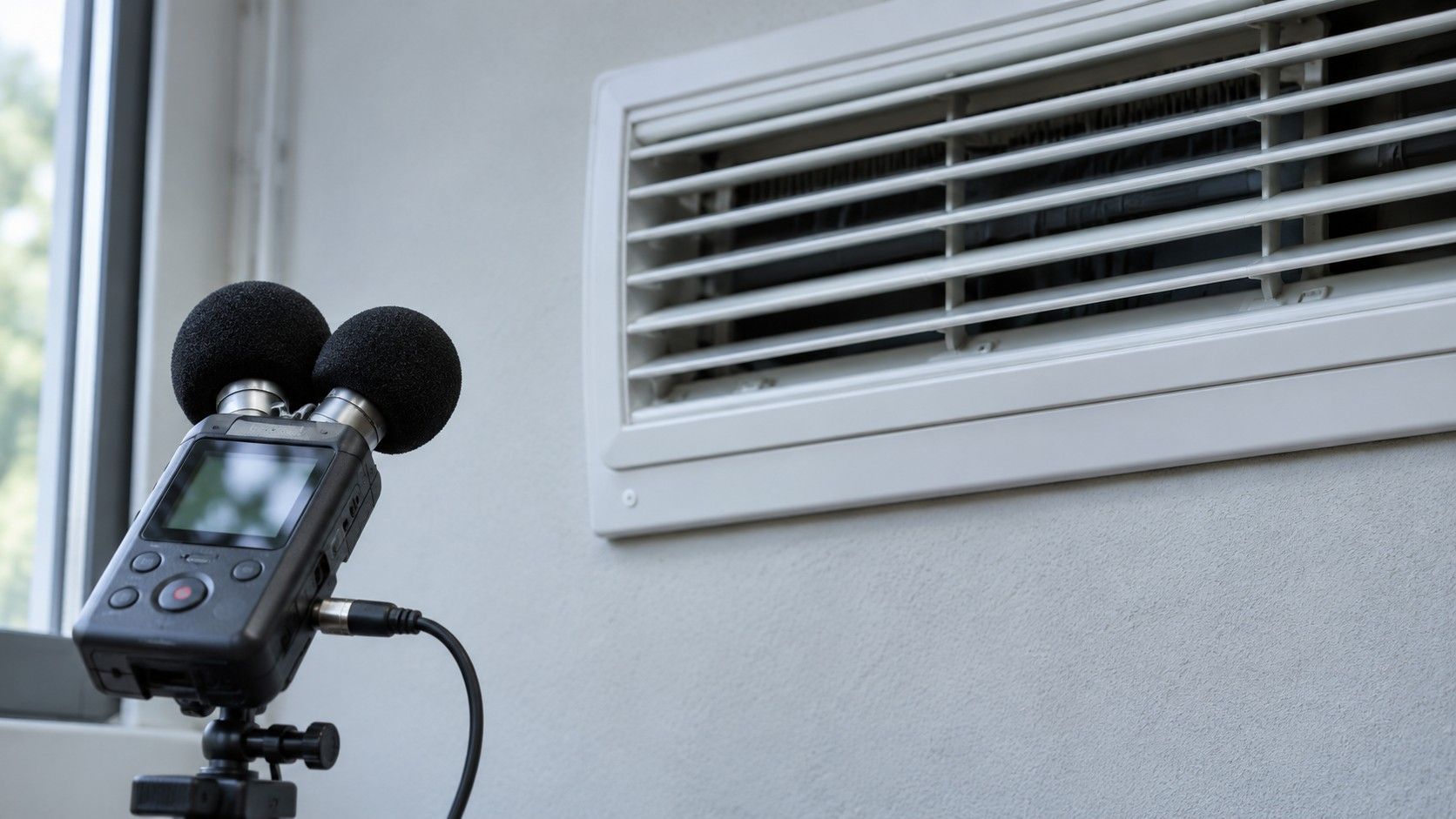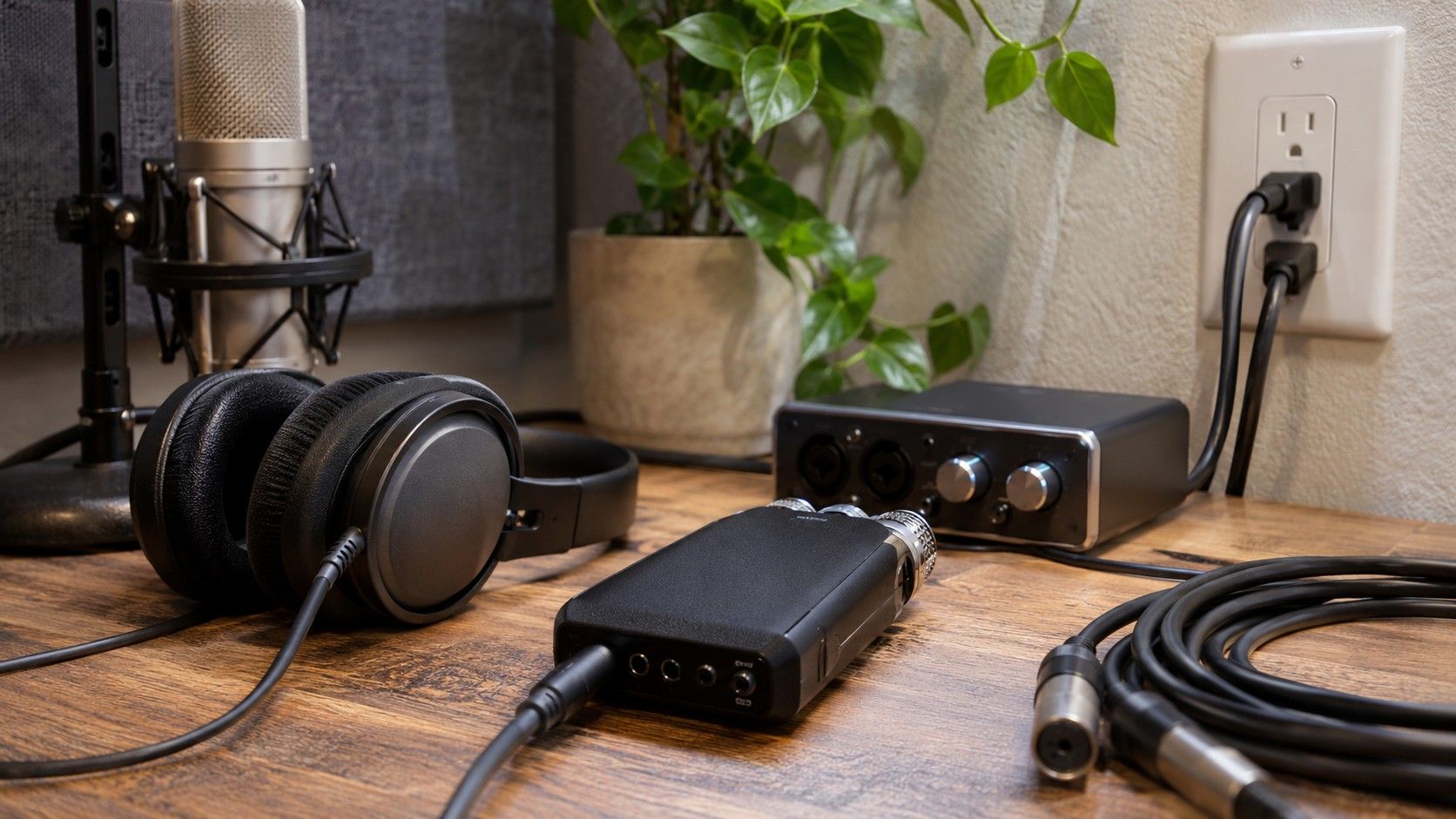
A passing vehicle can leave one unobtrusive swell between phrases or cover several notes with changing room sound. Those situations do not call for the same repair. Hear the take before, during and after the event, then check whether the music and background can be treated separately. The more they overlap, the more important it is to keep the original and consider a cleaner take rather than applying noise reduction everywhere.
Identify the traffic by shape and timing
Pick a passage that starts before you hear the sound and ends after it passes. A moving outdoor sound may rise and fade over several seconds; a horn or a short burst of tire noise can have a much sharper onset. Listen for its timing against the phrase and note when it stops drawing attention. A noise floor that has been there throughout the take may become audible only once the arrangement thins, so check more than one gap before labeling the apparent swell.
Compare the source track and the mix at a comfortable, repeatable playback level. First hear both through a neutral route so that live microphones and monitor effects do not add new sound during comparison. In a session, effects and compression may make a small recorded background change easier to hear. If the raw track is clean but an effects return carries the noise, work on the return or its input rather than trying to extract traffic from the entire program.
A spectrogram can help place the start and end of the event or show where it shares energy with the music. A vaguely rising low band is not evidence that a particular vehicle caused it. Air movement, background machinery and other acoustic sounds can have similar shapes, and the display settings affect what you see. Use the view as a guide to the relevant moments and compare with what was observed in the room. The repair can be based on a documented moving sound even if its exact source is unknown.
Listen for overlap with sustained notes
Mark which parts occur in actual spaces between notes. A gap might still contain the last trace of a guitar chord or the end of a sung consonant. Hear the passage as a full phrase before declaring it empty. An outdoor swell under only room tone gives you some room to reduce it. The same sound across a soft cello note or a held vocal is more difficult because removing everything audible in that interval removes part of the performance too.
Compare an unaffected sustained note of a similar pitch or intensity if the take contains one. What does its attack, body and end sound like? A low cut to reduce road rumble may take away the body of the neighboring instrument. A broad reduction on a changeable noise may leave a moving texture of its own. Ask whether the noise covers something the listener needs to understand, or is simply noticeable for a moment without hiding the song.
Check every source with potentially useful coverage, such as a close microphone or another recording of the same passage. A different source may contain less background noise, not none at all. Align recognizable musical events before comparing, and check tone and room as well as level. If the candidate has a different note length, stress or mic position, an exact splice may be less convincing than preserving the original performance with a small residual sound.
Choose practical changes for a new take
When the performance can be repeated, a short new take is often easier to assess than an aggressive edit. Listen from the recording position before starting and choose a naturally quieter interval when practical. Changes like closing a window or moving farther from an exterior wall may help if they are safe and suitable for the session. Compare the sound of the instrument as well as the background; a quieter spot that makes the source boomy or changes its room character may not improve the usable recording.
Try a compatible microphone position or placement using ordinary recording controls. Keep enough distance for the intended tone and listen for overemphasized mechanical or breath sounds if you move closer. A supported directional pickup pattern may help when the performer and noise arrive from different directions, but room reflections can limit the benefit. Test a short sample at the intended gain and arrangement rather than assuming a position will eliminate outside sound.
Preserve the timing reference of the first performance if a replacement is being considered. Have the performer hear or follow the relevant section where possible so a later repair does not add or remove a beat. Save a sample of the room at the same setup and gain, which can help continuity if a clear gap needs attention. Leave ventilation, access and equipment safety measures in place; no sound improvement is worth compromising the recording environment.
| How the sound meets the music | Practical next choice |
|---|---|
| One swell is in a true gap | Compare local attenuation or a matching room patch. |
| A tail overlaps a sustained note | Reduce only clearly separate components and check the note's body. |
| The main phrase is masked | Look for a verified source or a compatible retake before filtering. |
| The sound is inaudible in the intended mix | Keep the original if treatment costs useful detail. |
Repair a local passage only where possible
Work on a duplicate and start where the road sound is most distinct from the music. In a true gap, set an editable gain dip with smooth boundaries or use adjacent room tone of the same duration. Preserve the timeline and any real decay from either side. Check the edited interval in context; a hard mute followed by the original ambience often attracts more attention than a small residual swell. If you use a patch, confirm it contains no breath, transient or second noise event.
For a noise that overlaps a note, see whether a clearly separate frequency or source can be softened. A broad process cannot reliably tell moving outdoor noise from music that shares those frequencies and time. Test a small adjustment and compare it with the same section untreated. A noise profile taken from a different part of a passing sound may not match the section you want to reduce. A profile containing useful tone can take some of the performance along with the background.
If there is a cleaner alternate, make the substitution independently from the noise edit. Align the sound by its own attack and decay, match its local level and check the room at both boundaries. Keep fades away from an important onset or syllable where possible. A replacement that changes the meaning or phrasing of the line is a creative edit, not proof that the masked sound was recovered. If the source does not support that claim, report what was reduced and what remains.
Compare the feel before and after
Listen to the complete musical phrase at a normal level from the same point in both versions. Check the note lengths, the size of the room and whether an important sound seems to pull forward or collapse. If the repaired version seems unnaturally clean in a small gap, restore some continuity or use a lighter treatment. Prioritize preserving the music at the intended listening level over removing every sign of outdoor sound under close inspection.
Render and reopen the intended copy. Keep the original take and document the exact span of the repair, the source if you used one and any known limitation. A transient trace of the street may be acceptable when a repair would weaken an irreplaceable performance. If the noise still obscures a key phrase, treat it as unresolved rather than assuming another pass will restore it. What matters at handoff is which parts were verified as preserved, not how quiet the isolated background can be made.